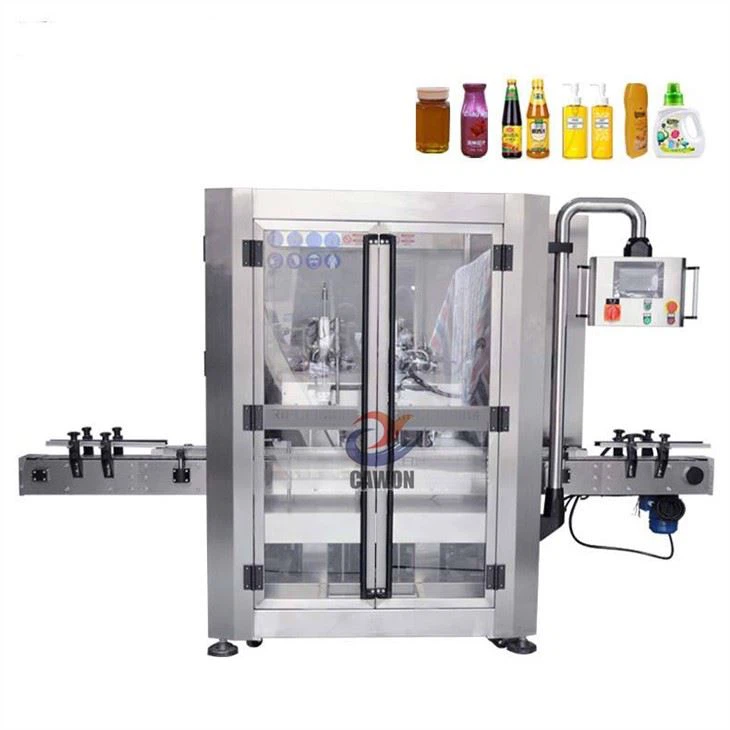
Q: What is the function of water filling machine?
A: In summary, the liquid filling machine relies on liquid pressure to fill bottles. As the liquid reservoir exerts pressure, the liquid flows into the bottle due to its weight. These machines offer precise control over the filling process, enabling the exact amount of liquid to be dispensed.
Q: What does a filling machine do?
A: Filling machine is packaging machinery to fill the product into bag, pouch, or containers such as bin or bottle. The types of filling machine differ depending on the products of liquid, paste, granule and powder.
Q: What is the principle of filling machine?
A: The liquid filling machine works when the pressure is high. This can be classified as liquid pressure filling, which means the liquid flows into the bottle based on its own weight when the amount of pressure of the liquid reservoir is equal to the amount of air present in the bottle.
Q: What is water filling line?
A: This water bottling machine line is mainly used for filling drink water. It combines rinsing and filling and capping as one automatic body suitable for PET or other plastic bottles.
Q: What are the advantages of tube filling machine?
A: The Tube filling machines are used by the industrial manufacturers, as the rapid speed of the machine is an advantage in filling up products like creams and lotions in tubes, quickly. As the machine has rapid motion the production efficiency also increases.
Q: What is a filling machine called?
A: Liquid filling machines, also known as flow filling machines, are commonly used in the beverage industry. Industrial liquid fillers dispense the exact amount of liquid-based products needed for different containers such as bottles, cartons, cans, or cups.
Q: What is industrial filling machine?
A: Filling machinery is being used by industries to fill every kind of container. Examples of Industries that use this type of machinery include: Pharmaceutical Products. Food & Beverages (Sauces, Dairy, Beverages, Canned goods, and more) Paint Related Products.
Q: How many types of filling machines are there?
A: They are: Manual liquid filling machine. Semi-automatic liquid filling machine. Automatic water filling machine.
Q: How do I choose a filling machine?
A: What are your product characteristics? The characteristics of the products you will be processing, more than anything, dictate the type of filling machine you need. The right machine will fill containers efficiently and accurately, while the wrong option will jam or fail to fill containers consistently.
Q: What is the process of table water production?
A: There are three primary processes used to produce purified water: deionization, distillation and reverse osmosis. Most bottlers choose RO over the others because of the many advantages, including reduced cost and increased performance.
Q: What is automatic tube filling machine?
A: Tube Filling Machine is an used for fills of ointment, cream, tooth paste, gel and semi solid materials in aluminum or in plastic tube and sealing of the tube. Application of the machine is in pharmaceuticals, cosmetics, foods, adhesive, paint, chemicals and others industries.
Q: What is filling and capping machine?
A: The machine that automatically fills and seals liquid products into containers is called automatic filling and capping equipment, which is the key equipment of packaging production line. The containers for filling and capping include bottles, cans, tubes, etc.
Q: What are the advantages of using a water filling machine?
A: Advantages include high filling accuracy, increased production efficiency, reduced product wastage, improved hygiene and sanitation, and compliance with regulatory standards for food and beverage packaging.
Q: Are there different types of water filling machines available?
A: Yes, there are different types of water filling machines including gravity fillers, piston fillers, rotary fillers, and monoblock filling systems, each suited for specific production requirements and container types.
Q: What factors should be considered when selecting a water filling machine?
A: Factors to consider include the type and size of containers, desired filling speed, accuracy requirements, level of automation, space constraints, and budget considerations.
Q: Can water filling machines handle different container sizes and shapes?
A: Yes, many water filling machines are designed to handle a wide range of container sizes and shapes by adjusting filling heads, conveyor belts, and other components to accommodate different packaging needs.
Q: What safety precautions should be followed when using a water filling machine?
A: Safety precautions include ensuring proper installation and grounding of the machine, wearing appropriate personal protective equipment (PPE), and following manufacturer's guidelines for safe operation and maintenance.
Q: How do I maintain a water filling machine?
A: Regular maintenance involves cleaning and sanitizing the machine, inspecting and lubricating moving parts, calibrating filling volumes, replacing worn-out components, and conducting preventive maintenance to ensure optimal performance and reliability.
Q: Are water filling machines suitable for use in bottling plants and beverage industries?
A: Yes, water filling machines are widely used in bottling plants and beverage industries for filling various types of water, juices, soft drinks, and other beverages into containers for distribution and sale.
Q: Can water filling machines be integrated into automated production lines?
A: Yes, water filling machines can be integrated with other packaging equipment such as rinsers, cappers, labelers, and shrink wrappers to create fully automated production lines, increasing efficiency and reducing labor costs.